

As Indian businesses scale, attract investors, and prepare for IPOs, ESG (Environmental, Social, and Governance) factors are no longer optional, they're strategic imperatives. ESG risk management isn’t just about compliance; it's key to investor trust, brand reputation, and sustainable growth.
What is ESG Risk Management?
ESG risk management is the process of identifying, evaluating, and mitigating risks related to environmental, social, and governance factors that could negatively impact a company’s performance, legal standing, or reputation.
ESG Risk Assessment is classified into:
[caption id="attachment_8056" align="aligncenter" width="600"]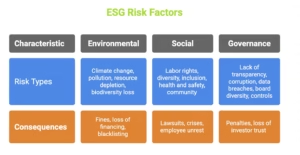 Types of ESG risks[/caption]
Effective ESG risk management safeguards the business from disruptions while laying a strong foundation for sustainable growth.
Why ESG Risk Management Matters for Indian Companies
Types of ESG risks[/caption]
Effective ESG risk management safeguards the business from disruptions while laying a strong foundation for sustainable growth.
Why ESG Risk Management Matters for Indian Companies
Types of ESG risks[/caption]
Effective ESG risk management safeguards the business from disruptions while laying a strong foundation for sustainable growth.
Why ESG Risk Management Matters for Indian Companies
- Better IPO Performance
- Investor Attraction
- Reduced Market Volatility
- Real-World Success Stories
- Tata Steel, a pioneer in ESG reporting since 2001, leveraged its robust ESG framework to gain investor trust during its ₹3,477 crore FPO in 2011, even when it was dealing with debt concerns.
- Globally, Patagonia has built a loyal investor and customer base through a robust sustainability framework that encompasses renewable energy investments and ethical sourcing practices. Their ESG credibility even allowed them to secure favorable pricing on sustainability-linked bonds.
- Risk Assessment: Identify material ESG risks relevant to your sector and geography. This involves stakeholder mapping, internal audits, benchmarking, and industry-specific scenario analysis.
- Integration with Core Strategy: ESG should be embedded into core functions like procurement, finance, and operations. It shouldn’t operate in a silo — strategic alignment is key.
- Stakeholder Engagement: Transparent engagement with investors, employees, regulators, and communities helps align expectations and improve risk awareness.
- Standardized Reporting: Use established frameworks like SEBI’s Business Responsibility and Sustainability Reporting (BRSR), GRI, or TCFD to disclose ESG performance. Clarity in reporting minimizes information asymmetry and builds credibility.
- Management System Certification: Adopt frameworks like ISO 14001 (environment), ISO 45001 (occupational health and safety), or ISO 9001 (quality). These certifications serve as concrete proof of your commitment to ESG standards and help streamline internal processes.
- Conduct In-Depth ESG Risk Assessments – Tailor these to industry-specific issues such as emissions in manufacturing or diversity in tech.
- Align ESG Strategy with India’s National Goals – Focus on initiatives like renewable energy adoption, resource efficiency, and inclusive growth.
- Improve Transparency in ESG Reporting – Embrace BRSR and provide both qualitative insights and quantitative metrics.
- Train Leadership and Staff – Ensure internal teams understand and actively contribute to ESG goals.
- Proactively Engage Stakeholders – Use feedback to guide ESG strategy and address emerging risks.
- Invest in Technology for ESG Data Management – Use digital tools to track performance, monitor risks, and improve accountability.
Explore Envint’s Responsible Investment services to integrate ESG considerations into investment decisions.