
As the EU ramps up climate ambition, it faces a growing risk of “carbon leakage,” where carbon‑intensive production relocates to regions with weaker climate rules or cheaper, higher‑emission imports replace home‑grown goods. The Carbon Border Adjustment Mechanism (CBAM) tackles this by ensuring imports bear a carbon price equivalent to that paid by EU producers. Launched in October 2023 under Regulation 2023/956, CBAM protects both the climate and EU industry, while incentivizing cleaner production worldwide.
What Is CBAM and Why it MattersAt its core, CBAM is a levy on selected imports, calculated on the greenhouse gases emitted during their manufacture. By matching the carbon cost of imports to that of domestic products (via the EU Emissions Trading System, or ETS), CBAM prevents unfair competitive advantages, curbs global emissions, and encourages non‑EU producers to adopt cleaner technologies, all in a WTO‑compatible framework.
How CBAM Works- Calculate Embedded Emissions: For each import, determine direct (on‑site) and indirect (energy‑related) emissions.
- Determine Carbon Cost Differential: Compare the carbon price the importer would pay under the EU ETS to any carbon price already paid abroad.
- Apply the CBAM Tariff: If foreign producers paid less, the importer surrenders CBAM certificates equal to the difference.
CBAM Time Line
Date Milestone May 17, 2023 The main CBAM Regulation (Regulation 2023/956) is made available. This regulation introduced the mechanism with the objective to reduce carbon emissions, put a fair price on carbon emissions from imported goods, and encourage cleaner industrial production. Oct 1, 2023 Transitional phase begins (reporting only; no financial payments) Oct 18, 2023 EU Regulation 2023/956 formally adopted, establishing CBAM Jan 31, 2024 First quarterly CBAM report due (for Q4 2023 emissions) Jan 2025 Launch of Non‑EU Installation Operator Portal in CBAM Registry Jan 2026 Definitive CBAM regime begins (CBAM certificate purchases and surrenders required) By 2030 A timetable setting out the inclusion of other goods, such as certain downstream products, in the scope of CBAM will be included in the review report mentioned for 'Before 2026'. [caption id="attachment_8344" align="alignnone" width="1024"]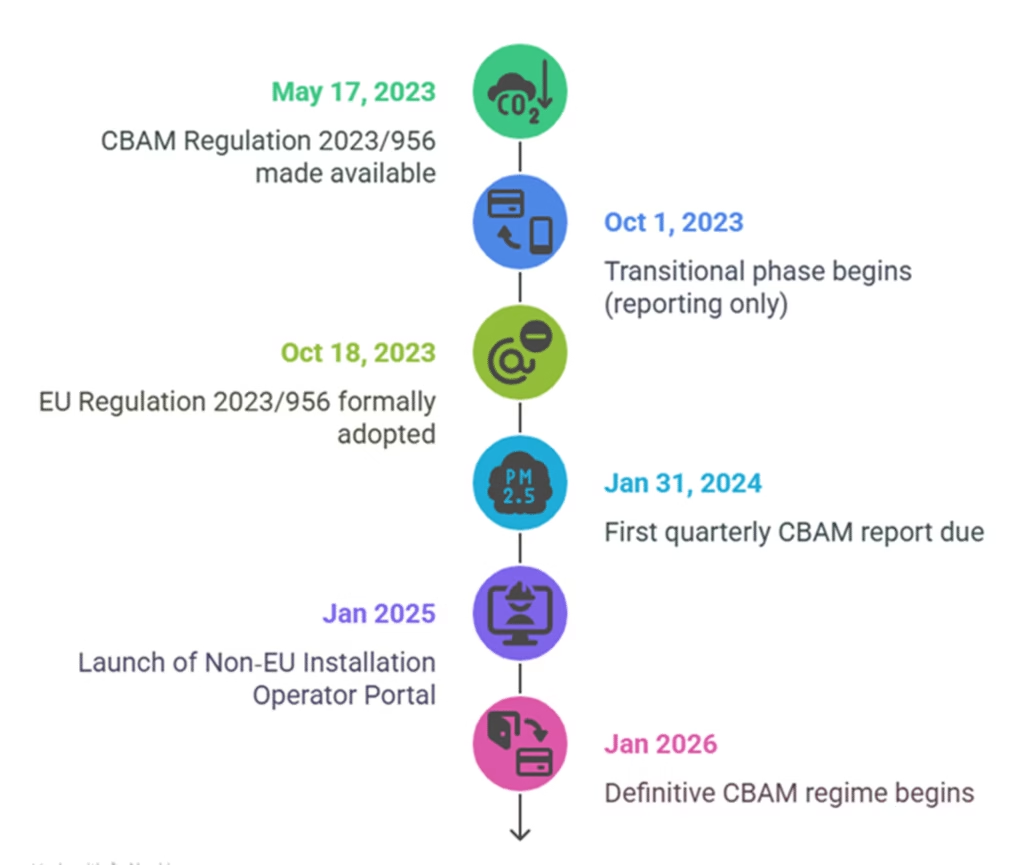 EU CBAM - Timeline[/caption]
Sectors Initially covered
Initially, CBAM applies to imports of certain goods and selected precursors whose production is carbon intensive and at significant risk of carbon leakage. These products are:
- Iron / steel
- Cement
- Fertilizers
- Aluminum
- Hydrogen
- Electricity
These six categories account for over 50% of emissions in ETS‑regulated industries. A review before 2030 may expand this list to downstream products.
Obligations During the Transitional PhaseBetween October 2023 and December 2025, importers must:
- Report Quarterly: Declare greenhouse gas emissions (direct + indirect) embedded in imports within one month after each quarter.
- Register: Enroll in the CBAM Transitional Registry via the national competent authority, using the CBAM Portal.
- Non‑EU Installation Operator Portal (from Jan 2025): Allows foreign facilities to upload verified emissions data for declarants to retrieve via EORI numbers.
- ‘Authorized Declarant’ Status (mandatory Jan 1, 2026): From early 2025, importers can apply for streamlined authorizations, guarantees, and interactions via the Authorization Management Module (AMM).
- CBAM Simplification Package (proposed Feb 26, 2025): Introduces a 50 tonne de minimis exemption (covering ~90% of importers) and eases compliance for remaining traders, while strengthening anti‑circumvention measures.
The EU’s CBAM represents a bold step to safeguard climate goals while promoting fair competition. By requiring importers to internalize carbon costs, it not only protects EU industry but also nudges global producers toward cleaner processes. As the mechanism shifts from reporting to full implementation in 2026, businesses trading with the EU must prepare now by leveraging CBAM calculators, registries, and pilot‑phase insights to ensure seamless compliance and contribute to a truly global climate solution.
Click here to know about, EU taxonomy framework.